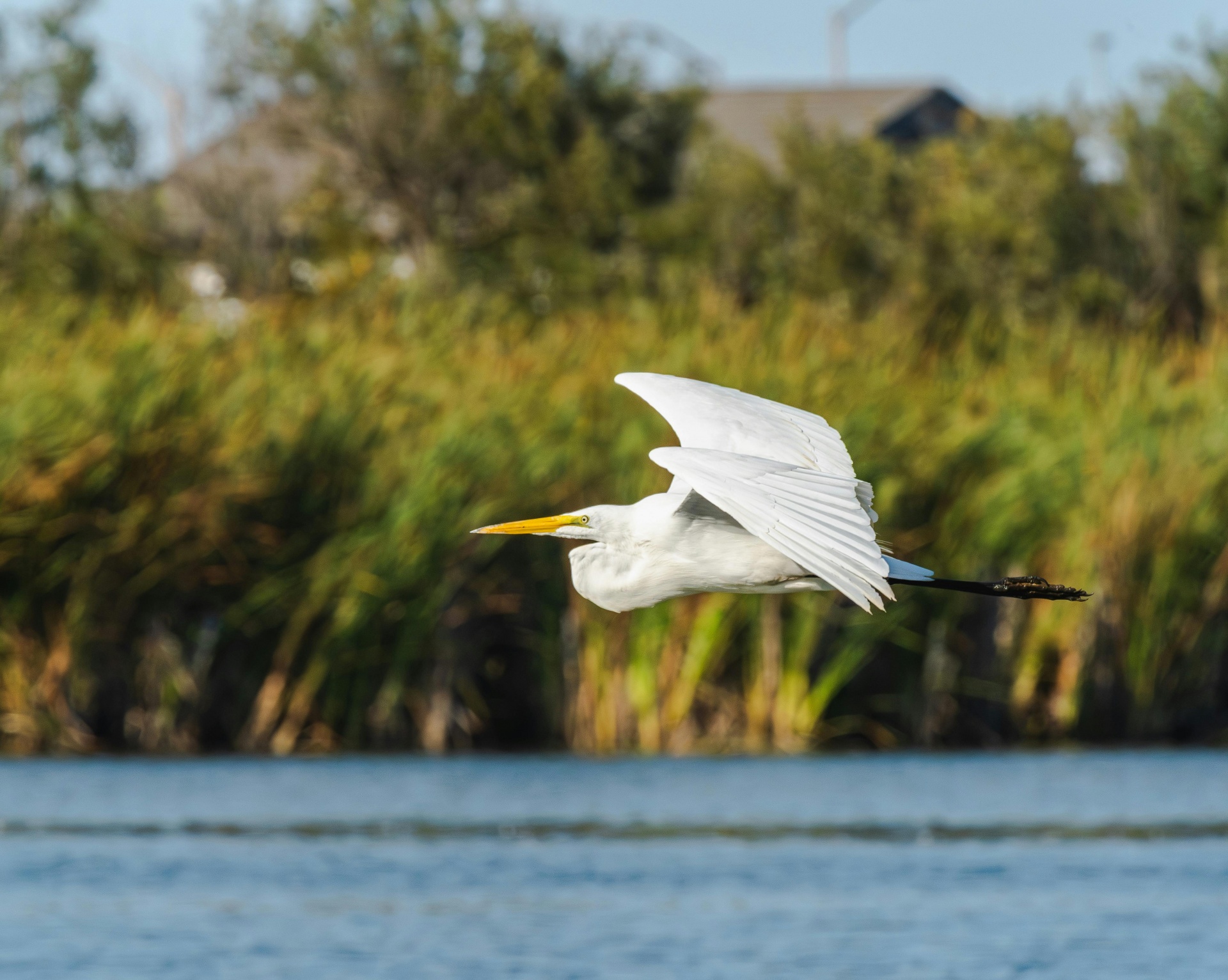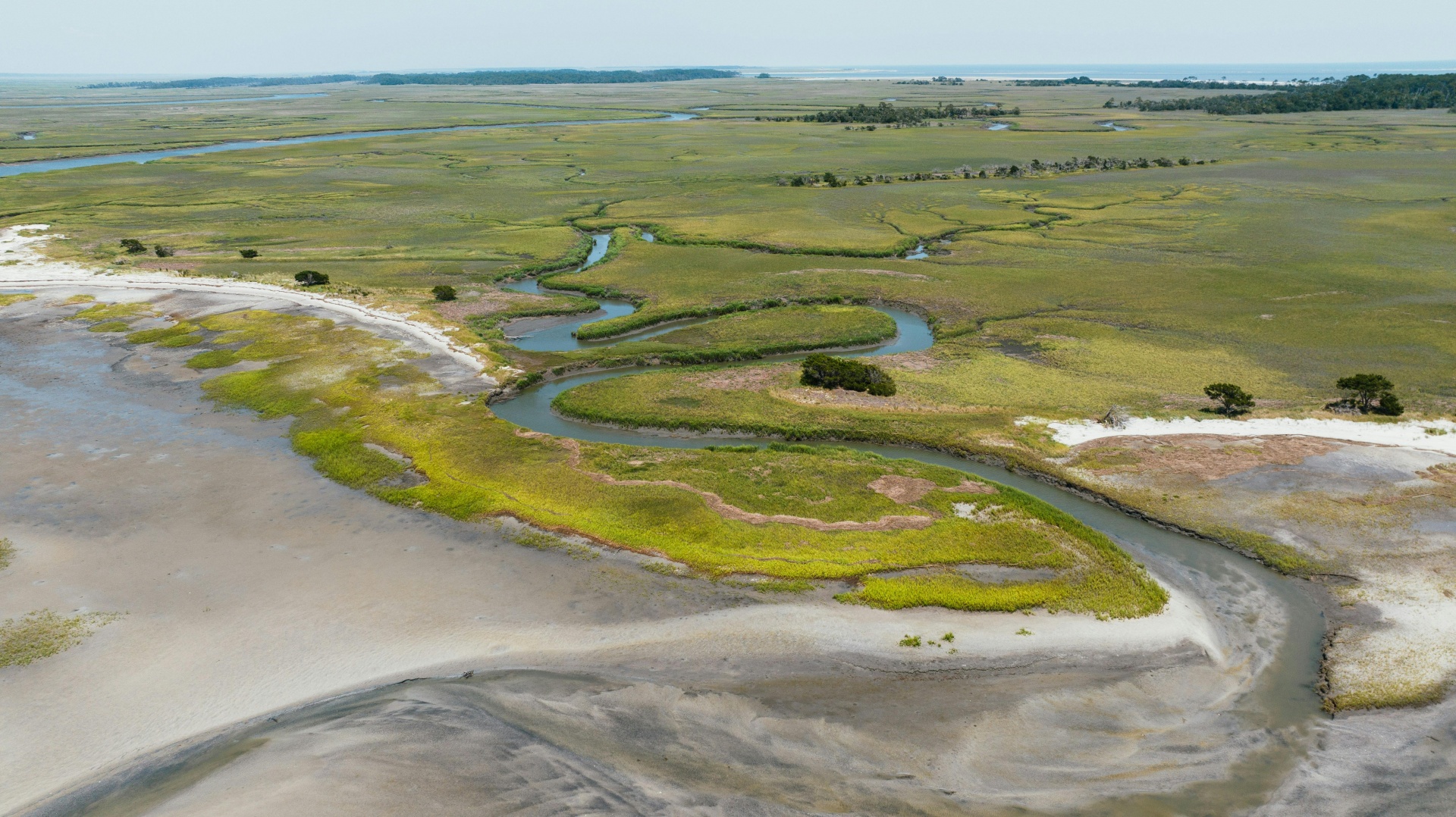
In 1975 4,053 acres of tidal creek, salt marsh, freshwater ponds, open fields and maritime forest located between the South Carolina mainland and Hilton Head Island were donated to the government and Pinckney Island National Wildlife Refuge was established to provide a nature and forest preserve for aesthetic and conservation purposes. The refuge is comprised of several islands and small hammocks, with Pinckney Island being the largest.
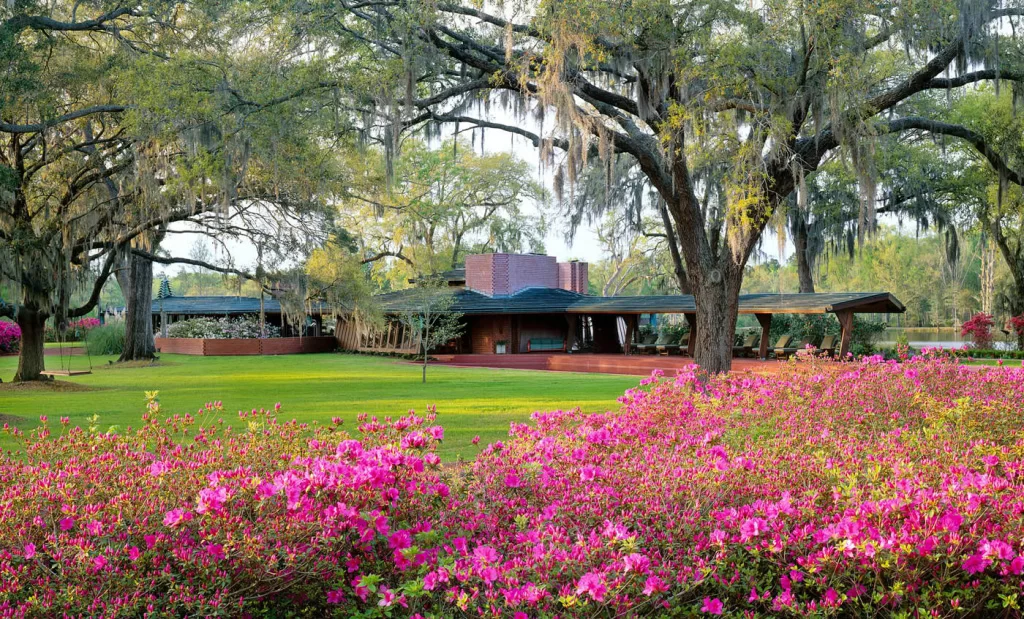
Hear the word “plantation” and visions of moss-draped trees, dramatic entrances and wide, sweeping verandas come to mind. But famed architect, Frank Lloyd Wright had his own vision. In 1939 C. Leigh Stevens, owner 4,000 acres of land amidst the cypress swamps of the Combahee River combined from the Old Combahee, Mount Alexander, Richfield, Charlton and Old Brass plantations in Yemassee, SC, commissioned Wright to design a contemporary, self-sufficient plantation, not just for farming but for entertaining and hunting, too. Wright’s design was centered around a home in harmony with its natural surroundings. Along with a main house and multiple guest cottages and service quarters, he envisioned a complex of outbuildings stables, pavilions and kennels. Plans also included laundry and bath houses for the staff and a swimming pool. The creation of Auldbrass was underway.
In 2014 the former Lemon Island Marina was transformed into the Maritime Center. The Port Royal Sound Foundation established the center to provide stimulating hands-on educational experiences, both indoor and outdoor, for everyone.
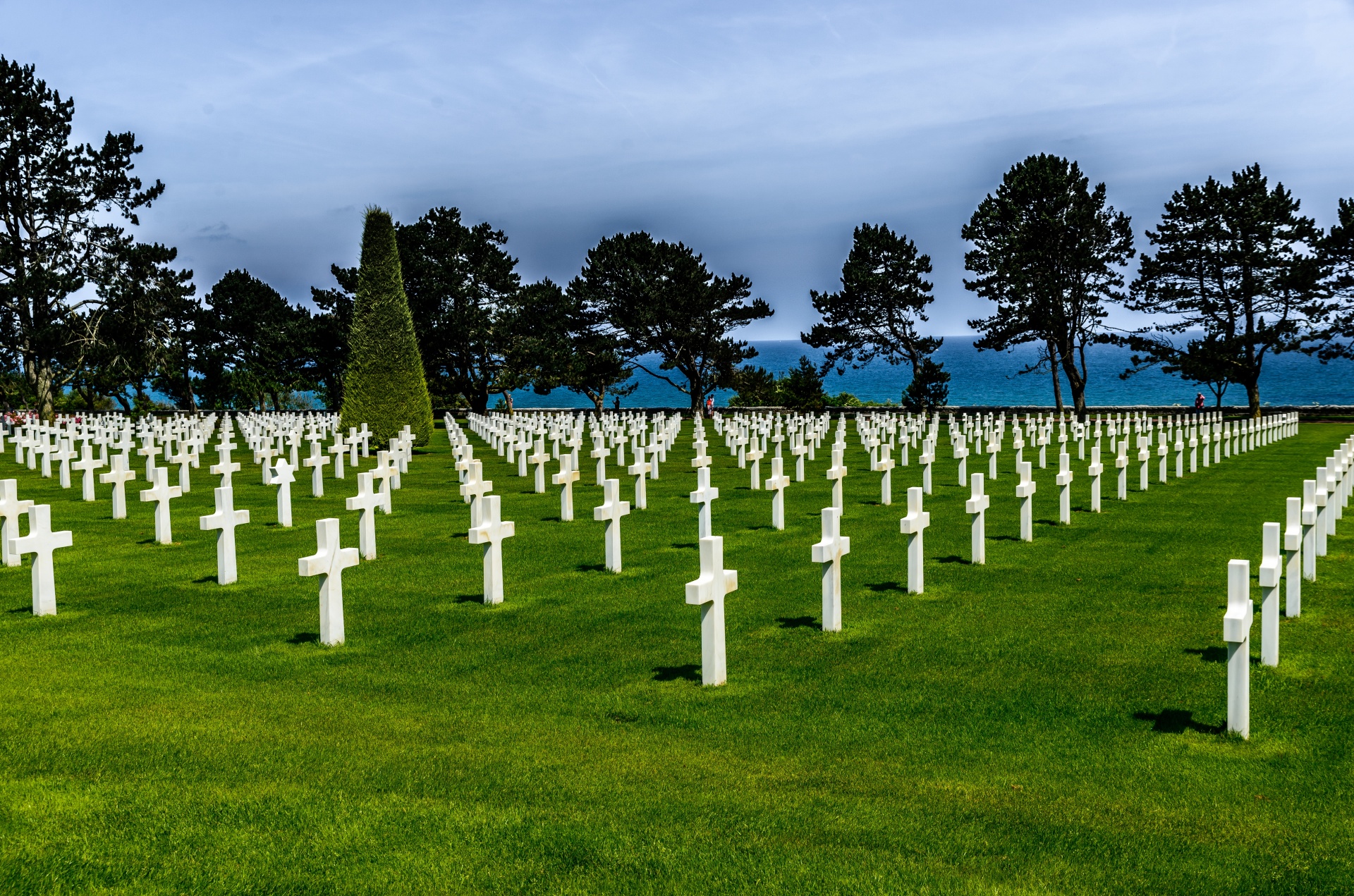
Beaufort National Cemetery was established in 1863 for burial of Union troops who perished during the Civil War. Over one hundred Confederate soldiers are buried there as well. The site serves as the final resting place for over 20,000 veterans from every major American conflict.
| Newer Posts |